
Find out more about The Open University's History courses and qualifications
![World War I soldiers [Posed by actors]](https://www.open.edu/openlearn/pluginfile.php/3261313/tool_ocwmanage/articletext/0/000716492_nat1.jpg)
“I often think it odd that it should be so dull, for a good deal of it must be invention”: exclaimed Catherine Morland in Jane Austen’s Northanger Abbey, when discussing history. I hope to demonstrate to you and Miss Morland in this often quoted outburst (most famously in E.H. Carr’s book, What is History?) that these prejudices and fears are groundless.
I am biased but I can think of no subject that has improved more in its teaching during the last 30 or so years. At my very traditional English prep school, we were given a list of 100 history dates to learn. Each form had different coloured dates and if you didn’t get a certain mark in the end of term test, you risked punishment, even a beating. As one of my former students bitterly complained: “The trouble with history is that it is just one thing after another”.
Enter any history lesson now at any level and you are confronted by a very different picture. Gone are the obsessions with dates and an endless rote learning of facts about kings, queens and battles. For some years I co-authored a history text book; when I finished my writing, I thought it was all over. We had in fact hardly started; there were illustrations to find, exercises to devise, websites to organise, primary sources (evidence created at the time) to be chased up; and suggestions for visits and other interesting activities to suggest.
Delivery of history has changed too beyond all recognition. No more endless copying down of illegible writing from the blackboard or, even worse, taking down dictation from browning notes. Posters, charts, pictures and other artefacts adorn the walls and other spaces. I took a group recently to the Imperial War Museum and watched as they experienced at first hand a re-enactment of a World War One trench. Video, DVD and tape recorders, video and digital cameras, radio and television have also made a huge difference.
History has also diversified. It is no longer just a straight plod through political history, largely explaining why the world map in the 19th Century was overwhelmingly red. There is women’s history and new areas opening up in studies of sport and recreation, fashion, popular culture, music, leisure, communication and a whole lot else besides.
History brings enormous benefits at all levels – personal, local, national and international. The first thing that any doctor asks when he or she sees a new patient is for their medical record. Family history, helped enormously by new technology, is a boom activity and I know some very sane people who have become totally obsessive about it. Everybody has a history, not just the famous or the infamous.
In the last few years local history societies have sprung up all over the country. There is hardly a town or community that now has not had at least one history book written about it. There is an enormous human need to understand our roots. Research has come to the living room, thanks to the computer. National pride is important but so too is understanding. How else can we begin to comprehend the problems of immigration, for instance, unless we start with the reasons for it in the first place and its consequences? International politics makes no sense at all without history, as the present situation in the Middle East demonstrates.
The study of history can bring many personal benefits. It should teach us to distinguish bias and interpretation and to read and interpret critically. In an age when the spin doctor (unfortunately) rules OK, this is important. Studying history can be a rounding experience and it links very well to other subjects, such the arts, social sciences and the various forms of science.
There are, I would agree, some pitfalls. Nostalgia can sometimes stop us looking at the present and prevent us thinking about the future. (Nostalgia, suggests the graffiti, is not what it used to be.) History can become a tool of propaganda; the first thing that most dictators do when coming to power is to reach for the history books. History text books in Haiti during the evil rule of Papa Doc Duvalier had pictures of him in the centre, flanked by God and Jesus Christ. History can fuel old grievances.
It is important to understand how a historian works. History starts with curiosity, an itch to know. Having set a task, the historian should first consult secondary sources (books, magazines and articles) that should give background information and the state of research. Having visited the library, book shop or internet, he or she will consult primary sources. This can be incredibly exciting but sometimes very frustrating. The evidence might be studied in an archive, such as a public records office or museum. It could be a personal diary, the census or a newspaper: the list is endless. It is always, unfortunately, incomplete; history is like a jigsaw with some of the pieces missing.
There is no such thing as truly objective history and if there was, it would probably be very boring. There is the bias of the person who created the evidence in the first place. All historians have their views and this leads to an element of subjective judgement. A Marxist historian will see the Industrial Revolution very differently to a conservative one. New ideological ideas, such as Feminism and Post Modernism (a discipline that places an enormous amount of emphasis on the bias of all texts), keep emerging. The important thing is that history should be based on evidence. Even science, it can be argued, is not totally objective; an element of subjectivity is present.
Even Jane Austin's Miss Morland would, I think, be impressed by the present status of history. Witness the popularity of historical books, television and radio programmes, and novels. The famous historian, A.J.P. Taylor, came up with probably the best defence of history - "because it is interesting”.
Study a free course
-
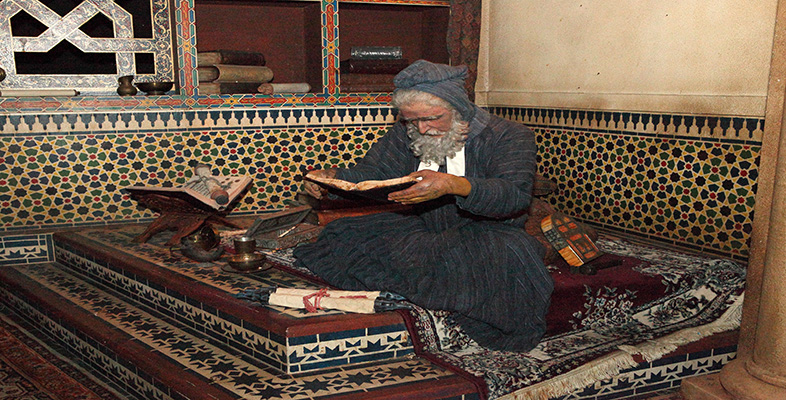
History of reading: An introduction to reading in the past
Learn more to access more details of History of reading: An introduction to reading in the pastThis free course, History of reading: An introduction to reading in the past, consists of a series of essays, drawn from material contained in the Reading Experience Database, that illustrate different aspects of reading in Britain during the period from 1450 to 1945. These essays are designed for you as the reader to dip in and dip out, ...
-

Making sense of art history
Learn more to access more details of Making sense of art historyYou can prepare for this free course, Making sense of art history, by looking around you. It's likely that wherever you are you'll be able to see some images. It's also likely that many of these will be intended to have some sort of effect on you. In the course itself you will be exploring the power of images via a study of contemporary art ...
Rate and Review
Rate this article
Review this article
Log into OpenLearn to leave reviews and join in the conversation.
Article reviews